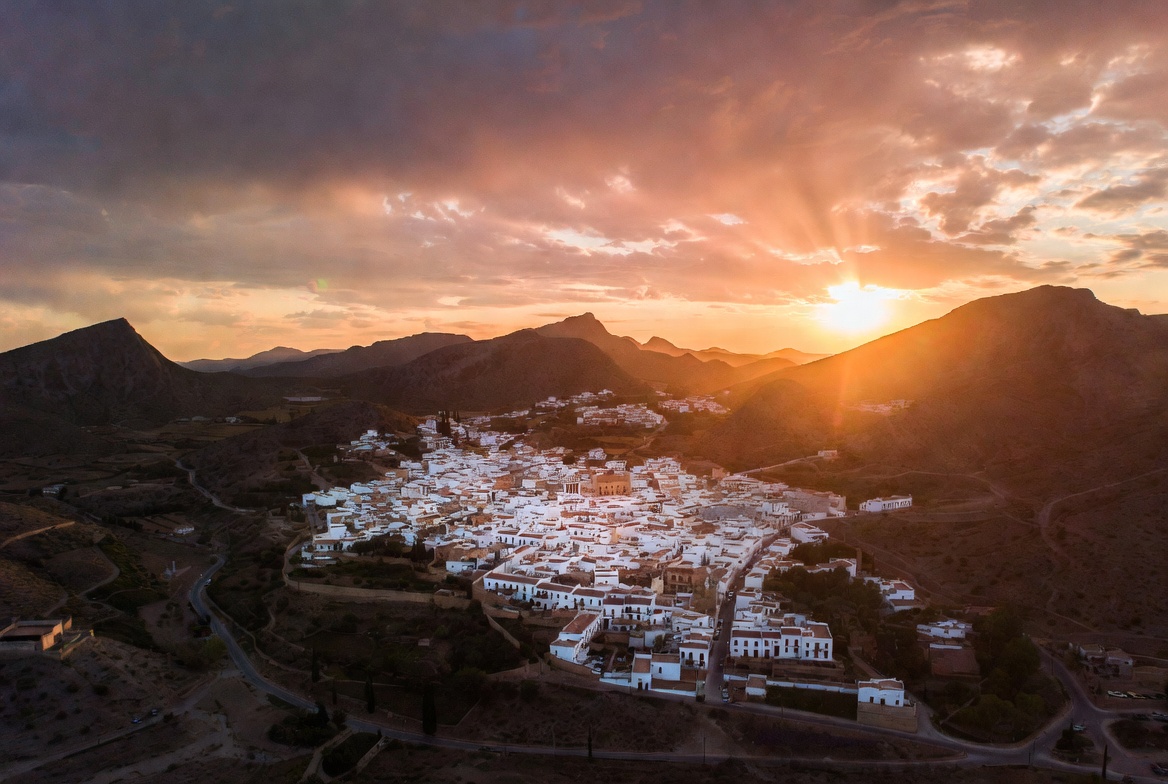
Nestled on the foothills of the Sierra de Gádor, just 25 kilometres from the capital of Almería, Alhama de Almería is one of those villages that seems to exist outside of time. A place where thermal springs still gush as they did in Roman times, where streets preserve the winding layout of the Arab medina, and where life flows at the slow, wise rhythm of villages that have been learning to live well for two thousand years.
A Name That Says It All
The name Alhama comes from the Arabic al-ḥamma, meaning "hot water" or "thermal bath". This is no coincidence. The springs that emerge at the foot of Cerro Vilano at a constant 46°C are, quite literally, this village's reason for being. Since antiquity, these waters have attracted Romans, Arabs, travellers and the curious. The water didn't just give the village its name — it gave it its identity.
"Alhama's water cures the body's ills and washes the soul's sorrows" — local saying
2,000 Years of History
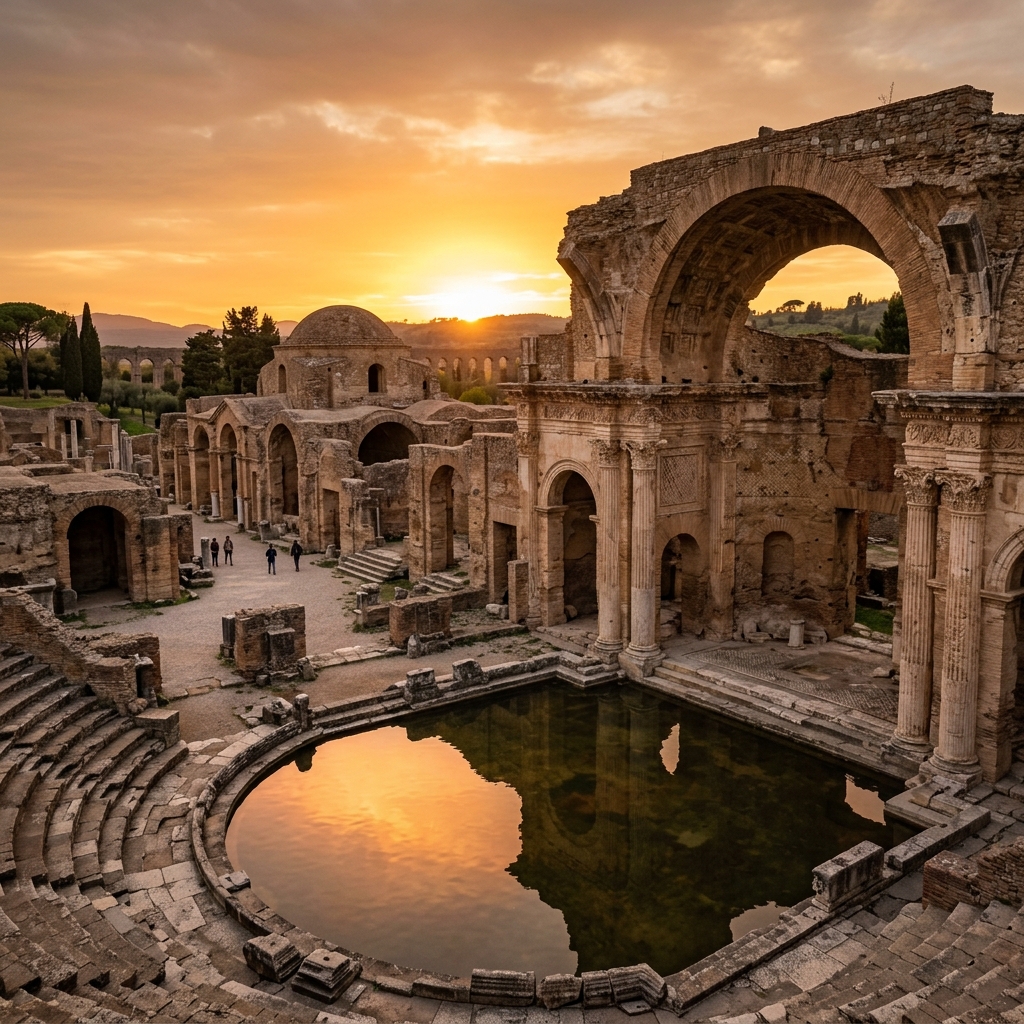
Alhama's history reads like an open book on the story of the entire Iberian Peninsula. Every civilisation that passed through left its mark in the stones, the customs, and the very way of understanding life.
Los Millares
Just a few kilometres from Alhama lies Los Millares, one of the oldest cities in Western Europe. The area was already inhabited over 5,000 years ago.
The First Thermal Baths
The Romans discovered and exploited the thermal springs. They built the first bathhouses and made Alhama a stopping point on the route connecting Cartagena to Gádor.
Al-Ḥamma, the City of Water
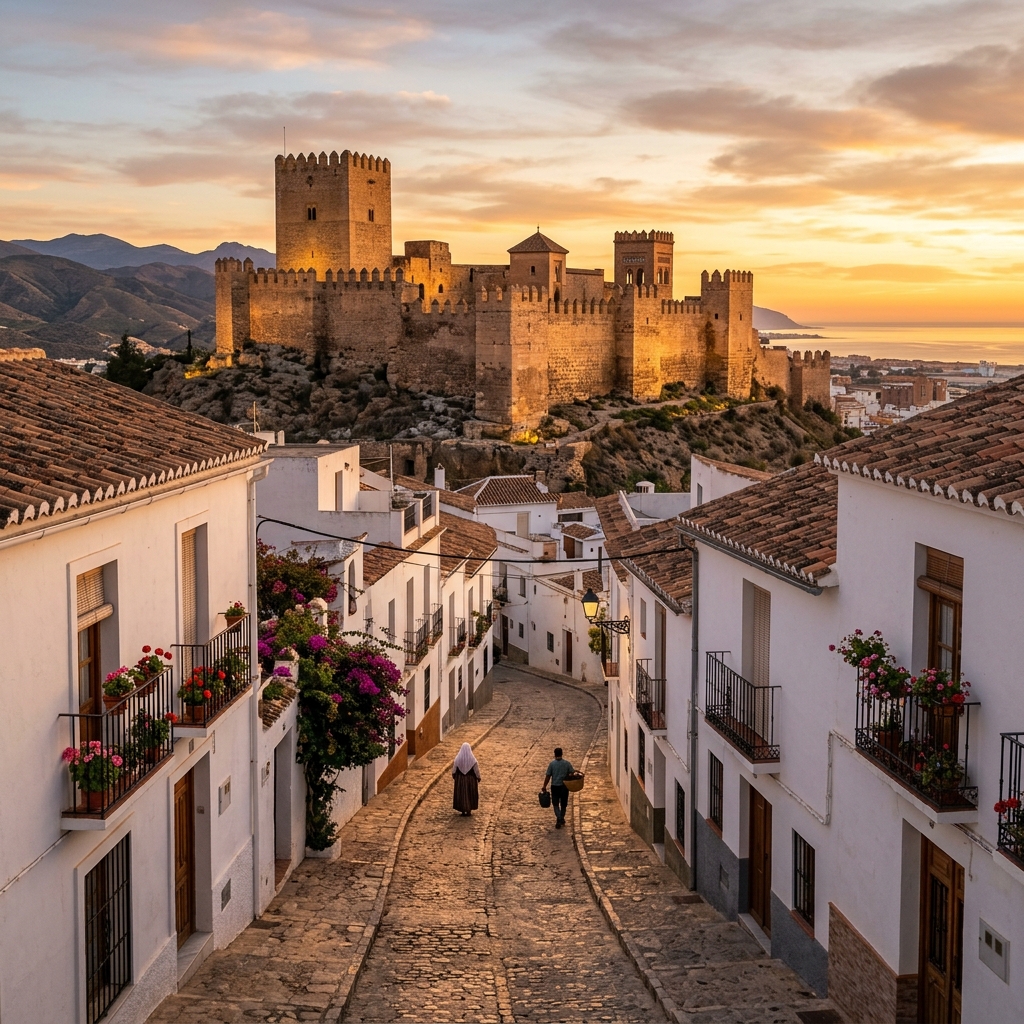
Under Arab rule, Alhama flourished. The Arabs perfected the baths, laid out the old quarter's winding alleyways, and created an irrigation channel system that watered the valley's orchards.
The Fall of the Nasrid Kingdom
Alhama was conquered by the Catholic Monarchs in 1489. The Church of San Nicolás de Bari was built on the foundations of the old mosque.
The Balneario San Nicolás
In 1877, the Balneario San Nicolás was inaugurated. Around the same time, Nicolás Salmerón was born — he would become president of Spain's First Republic.
Contemporary Alhama
Today Alhama is experiencing a quiet renaissance. The balneario has been renovated, trails marked, and thermal tourism attracts visitors seeking authenticity far from crowded coasts.
Nicolás Salmerón: The Illustrious Son
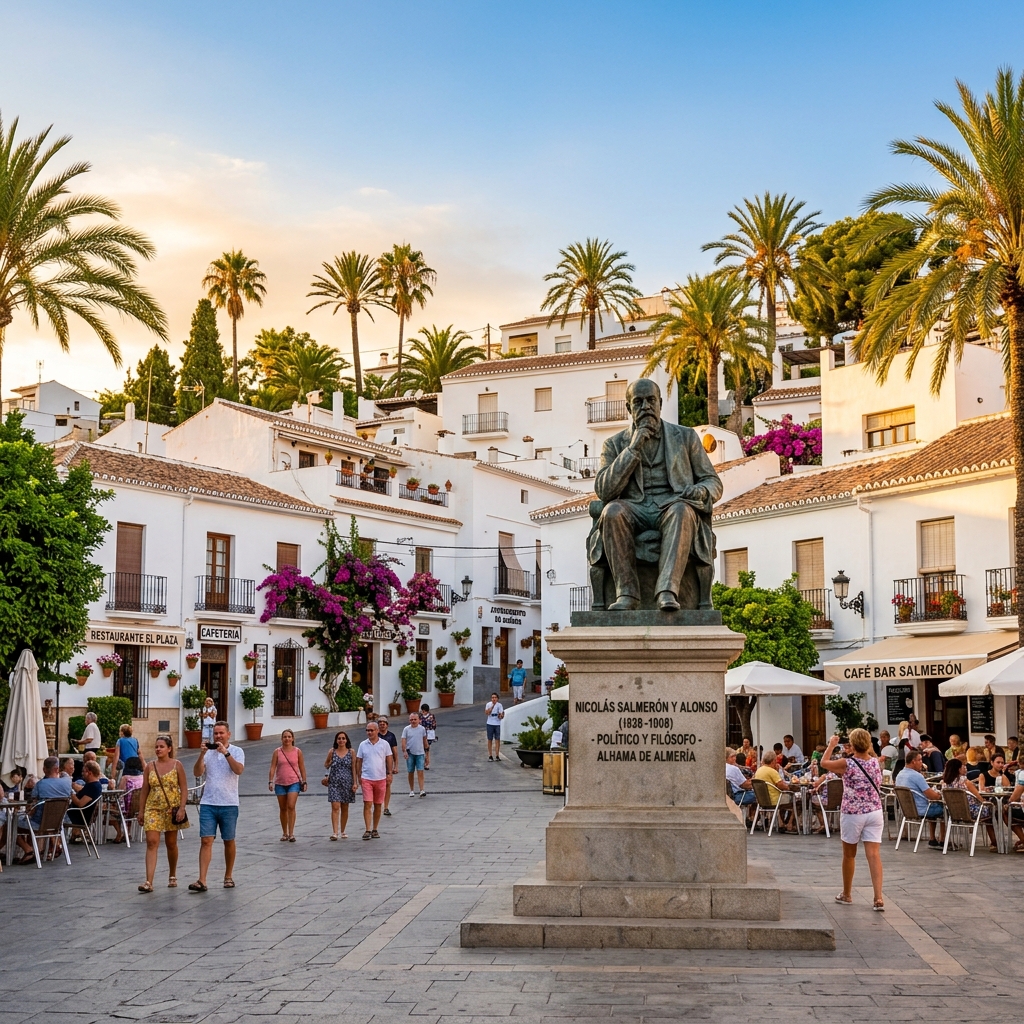
Alhama de Almería has the honour of being the birthplace of Nicolás Salmerón y Alonso (1838-1908), president of Spain's First Republic in 1873. A jurist, thinker, and tireless defender of human rights, Salmerón resigned the presidency rather than sign death warrants — an ethical gesture that earned him universal admiration.
His statue presides over the Plaza de España, and the house where he was born can be visited in the village centre.
Monumental Heritage
Iglesia de San Nicolás de Bari
Built in the 16th century over the old mosque, the parish church is Alhama's most iconic building. Its bell tower is visible from every point in the village. The interior preserves an 18th-century Baroque altarpiece and the baptismal font where Salmerón was christened.
La Puente
An 18th-century neoclassical bridge with its impressive double-tiered arch structure. At sunset, the golden light transforms the bridge into a perfect postcard of inland Andalusia.
The Arabic Morabito
A small 16th-century Islamic religious building, later converted into a Christian hermitage. One of the few morabitos preserved in Spain and a fascinating testament to the coexistence of cultures.
The Balneario San Nicolás
Inaugurated in 1877 and recently renovated, the sulphurous waters at 46°C are recommended for rheumatic, respiratory, and dermatological conditions. A place of calm and wellbeing unique in the province.
Nature & Landscape
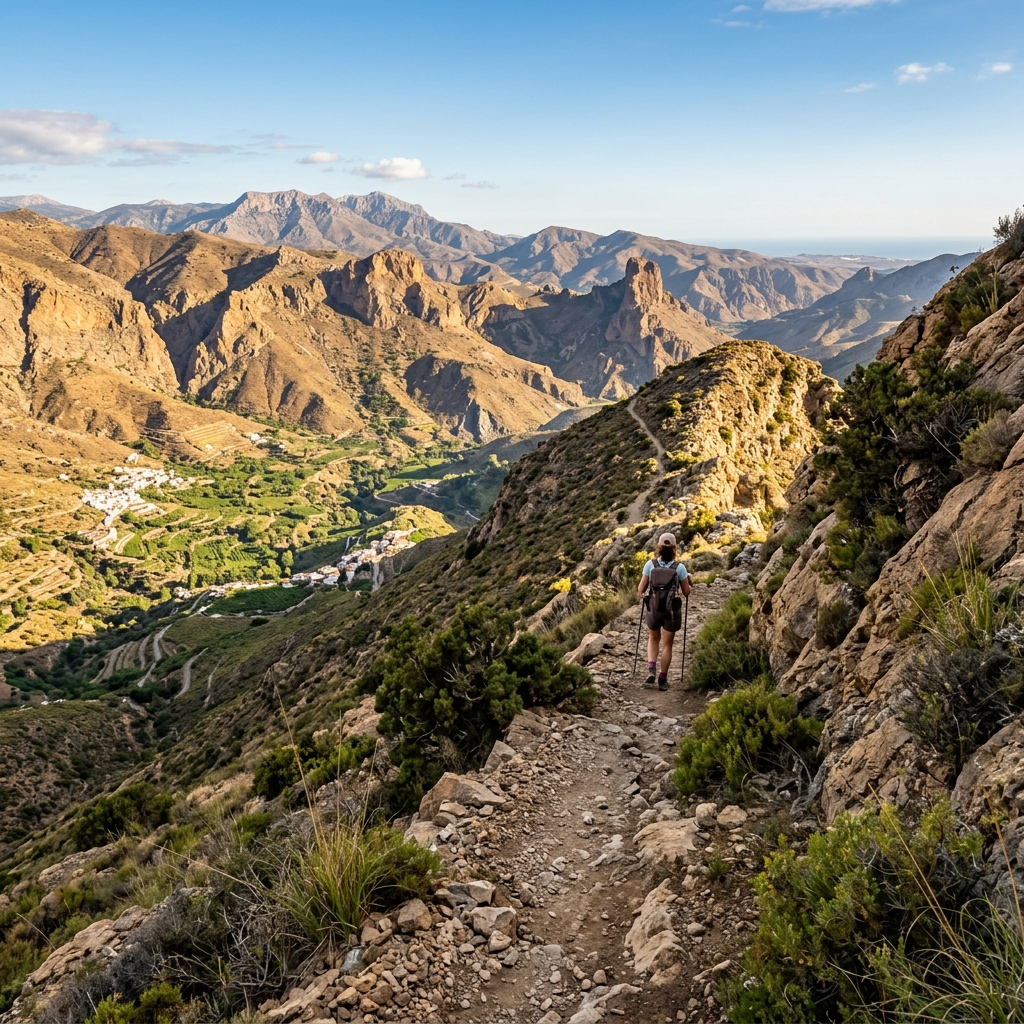
Alhama occupies a privileged setting between the Sierra de Gádor and the Andarax Valley. The altitude (520m) ensures a pleasant climate even in summer, with cool nights and a starry sky that rivals the finest on the peninsula.
Getting There
Alhama de Almería is 25 km from Almería via the A-7 and A-348. 2 hours from Granada, 3 hours from Malaga, and 30 minutes from Almería airport.